微聚焦超声用于面部与颈部皮肤松弛年轻化:一项针对皮肤松弛患者疗效与安全性的前瞻性 pilot 观察研究(Medicine, 2026)
2026年10月27日25 min read
Medicine
Medicine
结论与实践要点
本研究为一项小样本、非对照的前瞻性 pilot 观察,纳入 21 例有面部松弛的青中年受试者(平均 39.62 岁),仅接受单次微聚焦超声(MFUS One)治疗,并在基线、术后即刻、1 月、3 月进行评价。客观量表显示,WSRS 评分在术后即刻即由 3.33 降至 1.90(降幅约 42.9%,P<.01),且至 3 月仍维持在 2.19 的较低水平;GAIS 主观改善评分在 3 月时仍达 2.38,说明在观察窗内疗效具有一定持续性。安全性方面,仅见轻中度、可自行缓解的水肿与红斑,疼痛评分偏低(2.86/10),受试者满意度较高(3.67/5),未见严重或长期不良事件。
临床落地需把握边界:该研究无随机对照与盲法、样本仅 21 例且随访仅 3 月,无法排除安慰剂效应与自然变异;受试者以年轻女性为主、基线松弛程度多为轻中度,其结果更适用于轻中度面部/颈部皮肤松弛的初步评估,对中重度下垂或明显下颌缘松弛者,设备治疗的提升幅度有限,通常难以替代手术类提升。建议作为术前沟通与分阶段抗衰方案中的可选非侵入手段,并在更大样本与更长随访研究中进一步验证。
Facial and neck skin laxity reflects age‑related changes in collagen fibers and deeper support structures. Growing patient demand for effective, non‑invasive tightening has driven interest in microfocused ultrasound (MFU) as a treatment modality. This study aims to evaluate the clinical efficacy and safety of MFU in improving facial and neck skin laxity and wrinkles in young and middle-aged adults. A pilot study was conducted on 21 patients with facial laxity who underwent a single MFU treatment using the MFUS One device. Efficacy was assessed using the Wrinkle Severity Rating Scale and Global Aesthetic Improvement Scale at baseline, immediately posttreatment, 1 month, and 3 months posttreatment. Safety was evaluated via adverse events, pain scores (Visual Analog Scale), and patient satisfaction. The cohort included 21 patients (1 male, 20 female; mean age 39.62 ± 7.24 years). Wrinkle Severity Rating Scale scores decreased significantly immediately posttreatment (1.90 ± 0.30 vs baseline 3.33 ± 0.58, P < .01), with a 42.9% reduction, and remained improved at 1 month (2.10 ± 0.44, P < .01) and 3 months (2.19 ± 0.40, P < .01). Global Aesthetic Improvement Scale scores showed significant immediate improvement (2.95 ± 0.74) and sustained efficacy at 1 month (2.43 ± 0.60) and 3 months (2.38 ± 0.50). Adverse events were mild and transient: edema (3.95 ± 1.28 days) and erythema (1.05 ± 0.59 days), with 1 case of mild hyperpigmentation resolving within 1 month. Mean Visual Analog Scale pain score was 2.86 ± 0.79 (mild), and patient satisfaction was high (3.67 ± 0.58). In this small, uncontrolled pilot study, MFU showed preliminary evidence of improvements in skin tightness and wrinkle reduction, together with high patient acceptance and acceptable short-term safety during the 3-month follow-up period.
Keywords: clinical safety、facial and neck laxity、microfocused ultrasound、noninvasive rejuvenation、wrinkle improvement
Facial and neck skin laxity, a primary hallmark of cutaneous aging, arises from a complex interplay of structural and functional deteriorations in the skin and underlying tissues. These include progressive depletion of collagen and elastin fibers in the dermis, atrophy and redistribution of subcutaneous adipose tissue, weakening of the superficial musculoaponeurotic system (SMAS), and alterations in bone morphology. [ 1 ] Such changes manifest clinically as wrinkles, sagging contours, and loss of skin elasticity, significantly impacting individuals’ aesthetic perception and quality of life. [ 2 ] With the growing societal emphasis on youthful appearance, demand for effective, noninvasive rejuvenation modalities has surged, driving innovation in minimally invasive aesthetic technologies.
Traditional surgical interventions, such as facelifts, offer dramatic results but are associated with substantial trauma, prolonged recovery, and inherent risks of scarring or nerve damage, limiting their appeal to a broader population. [ 3 ] In contrast, noninvasive approaches (including intense pulsed light, radiofrequency, and injectables) have gained traction due to their favorable safety profiles. However, these modalities often target superficial layers or rely on temporary volume augmentation, failing to address deep-tissue laxity at the SMAS level. [ 4 ]
Microfocused ultrasound (MFU) has emerged as a distinctive noninvasive solution, leveraging focused ultrasound energy to induce controlled thermal coagulation in targeted deep tissues without compromising the epidermis. [ 5 ] This precise thermal stimulation triggers immediate collagen contraction and initiates a cascade of regenerative processes, including fibroblast activation, extracellular matrix (ECM) remodeling, and new collagen synthesis. [ 6 ] Notably, MFU’s ability to reach depths up to 4.5 mm, encompassing the SMAS, distinguishes it from shallower-acting modalities, offering potential for more comprehensive facial rejuvenation. [ 7 ]
Despite accumulating evidence supporting MFU’s efficacy, existing studies suffer from several limitations. Many have small sample sizes or rely on subjective assessments without standardized metrics. [ 8 ] Meta-analyses and systematic reviews highlight inconsistencies in reported outcomes, partly due to variations in treatment parameters, patient demographics, and evaluation criteria. [ 4 , 9 ] Moreover, data specific to young and middle-aged adults, who often present with early-stage laxity and distinct tissue characteristics, remain sparse, limiting generalizability across age groups.
To address these gaps, this prospective study systematically evaluates the efficacy and safety of MFU for facial and neck rejuvenation in a cohort of 21 patients. By employing validated scales, including the Wrinkle Severity Rating Scale (WSRS) for quantitative wrinkle assessment and the Global Aesthetic Improvement Scale (GAIS) for overall aesthetic evaluation, coupled with objective measurements of adverse events and patient-reported pain (Visual Analog Scale [VAS]), this pilot observational study aims to provide preliminary clinical evidence. With follow-up assessments at 1 and 3 months, the study explores the short-term temporal pattern of posttreatment improvement. Ultimately, this work seeks to refine the evidence base for MFU, supporting its standardized application in noninvasive facial rejuvenation and guiding future research directions.
This prospective study was conducted at the Nanjing Yijia Medical Aesthetic Clinic and the First Affiliated Hospital of Nanjing Medical University between July 2024 and January 2025. The protocol was approved by the Ethics Committee of Nanjing Yijia Medical Aesthetic Clinic (Approval No.: 2024-001) and conformed to the principles of the Declaration of Helsinki. All participants provided written informed consent prior to enrollment.
Eligible participants were adults (≥ 18 years) with mild to moderate facial and neck skin laxity, defined as visible sagging of the mid-lower face, jawline, or neck without severe cutaneous pathology. Fitzpatrick skin phototype was recorded for each patient using a standard self‑report questionnaire about ultraviolet sensitivity (tendency to burn), with clinician confirmation in cases of uncertainty.
Inclusion criteria were: WSRS scores of 2 to 4 (mild to moderate wrinkles); no history of facial rejuvenation treatments (e.g., laser, radiofrequency, or injectables) in the 3 months prior to enrollment; absence of severe systemic diseases (e.g., uncontrolled diabetes, autoimmune disorders); ability to comply with follow-up schedules; and realistic expectations regarding treatment outcomes.
Exclusion criteria included: active skin conditions (e.g., eczema, psoriasis, or infections) in the treatment area; a history of hypersensitivity to ultrasound gel or topical agents; pregnancy or lactation; presence of facial implants, pacemakers, or other metallic devices; a history of keloids or abnormal wound healing; and severe psychiatric disorders precluding informed consent.
Sample size: As a pilot prospective observational study, the sample size was intended to provide preliminary effect estimation. To improve statistical transparency, we nevertheless performed a priori paired-comparison sample size calculation for change in GAIS score, assuming a moderate standardized effect size (Cohen d = 0.5), a 2-sided α of 0.05, and 90% power (calculated using a paired t-test sample size formula via an online calculator, https://sample-size.net/sample-size-study-paired-t-test/). The minimum required number of evaluable participants was 11. We enrolled 21 patients to improve estimate precision and partly account for uncertainty in variance assumptions.
Prior to treatment, participants underwent a standardized skin assessment to confirm eligibility. Facial cleansing was performed using a gentle, pH-neutral cleanser (Cetaphil, Galderma) to remove cosmetics and debris. A 24-hour skin patch test with the ultrasound coupling agent (Hunan Peninsula Medical Technology Co., Ltd.) was conducted to rule out allergic reactions.
Standardized photographs were captured using a VISIA-CR skin detector (Canfield Scientific) under controlled lighting (5500K daylight) and fixed camera parameters (aperture f/8, shutter speed 1/125 seconds). Images were obtained in 3 views: frontal, left 45°, and right 45°, with the camera lens aligned parallel to the facial plane at a fixed distance of 50 cm. These images served as baseline references for posttreatment comparisons.
All treatments were performed by a board-certified dermatologist with over 5 years of experience in energy-based devices, using the MFUS One ultrasonic therapy system (Hunan Peninsula Medical Technology Co., Ltd.). Four treatment heads were employed: M3.0, M4.5, D3.0, and D4.5, targeting depths of 3.0 mm and 4.5 mm in both muscular (M) and dermal (D) layers, respectively.
The treatment sequence was standardized as follows:
M4.5 and M3.0 heads: applied using a linear fixation technique. Vertical emission lines were delivered at 1-mm intervals, with each line repeated until full coverage of the target area (mid-lower face and mandibular region) was achieved.
D4.5 and D3.0 heads: used in a sliding mode to ensure uniform energy distribution. The number of pulses per head was adjusted based on tissue laxity (range: 150–300 pulses per area), with higher density applied to areas with prominent laxity (e.g., nasolabial folds).
Device parameters were set to 4 Hz frequency, with energy levels ranging from III to V (adjusted intraoperatively based on participant tolerance, assessed via verbal feedback). Throughout the procedure, the treatment head was maintained perpendicular to the skin surface to ensure precise energy deposition. Total treatment duration per participant was 25 to 35 minutes, depending on facial anatomy.
Immediately after MFU, a cold compress (0–4°C) was applied to the treated area for 10 minutes to reduce acute erythema. Participants then received light-emitting diode phototherapy (Hunan Peninsula Medical Technology Co., Ltd., model: Derma) using a combination of 590 nm (yellow light) and 830 nm (near-infrared light) wavelengths for 10 minutes, with eyes protected by opaque goggles.
Posttreatment instructions included: apply a hyaluronic acid-based moisturizer (La Roche-Posay) twice daily for 7 days; ensure strict sun protection (using sun protection factor 50 + broad-spectrum sunscreen and physical barriers) for 4 weeks; avoid hot showers, saunas, or strenuous exercise for 48 hours; and refrain from using topical retinoids or alpha-hydroxy acids for 1 week.
Assessments were conducted at 3 time points: baseline (pretreatment), immediately, 1 month posttreatment, and 3 months posttreatment.
WSRS: A validated 5-point scale (1 = no wrinkles; 5 = severe, deep wrinkles) was used to quantify wrinkle improvement in target areas (forehead, periorbital, nasolabial folds). [ 10 ]
GAIS: A 5-point scale (0 = no improvement; 4 = excellent improvement) was used to assess overall facial rejuvenation, based on side-by-side comparison of pre- and posttreatment photographs. [ 11 ] The same blinded raters as WSRS conducted GAIS evaluations.
Ratings were independently performed by 2 dermatologists blinded to treatment timing; discrepancies were resolved by consensus. Inter-rater reliability was subsequently quantified using intraclass correlation coefficients.
Adverse events: erythema, edema, and pigmentation were recorded at each follow-up, with duration and severity (mild/moderate/severe) documented. Severe adverse events (e.g., blisters, scarring) were tracked throughout the study period.
Pain assessment: VAS was used to rate treatment discomfort immediately postprocedure, with scores ranging from 0 (no pain) to 10 (excruciating pain). [ 12 ]
At 3 months posttreatment, participants completed a 5-point satisfaction questionnaire (0 = extremely dissatisfied; 4 = extremely satisfied), with additional open-ended feedback on perceived benefits or drawbacks.
Data were analyzed using R software (version 4.4.1; R Foundation for Statistical Computing). Normality of continuous variables was tested via the Shapiro–Wilk test. Normally distributed data are presented as mean ± standard deviation, and non-normally distributed data as median (interquartile range). Comparisons of WSRS and GAIS scores across time points were performed using repeated-measures analysis of variance followed by Tukey post hoc test for normally distributed data, or the Friedman test with Dunn correction for nonparametric data. Categorical variables (e.g., adverse event rates) were analyzed using Fisher exact test. A 2-tailed P -value < .05 was deemed statistically significant.
A total of 21 patients (1 male, 20 female) were enrolled in the study, with a mean age of 39.62 ± 7.24 years (range: 26–54 years). All participants completed the full treatment course and 3-month follow-up, with no dropouts reported. Baseline characteristics, including skin type (Fitzpatrick III–IV) and wrinkle severity, are summarized in Table 1 .
Table 1 Baseline characteristics of patients.
| Clinical variables | Value |
|---|---|
| Age | 39.62 ± 7.24 |
| Gender, n (%) | |
| -Male | 1 (4.8) |
| -Female | 20 (95.2) |
| Fitzpatrick type, n (%) | |
| -III | 16 (76.2) |
| -IV | 5 (23.8) |
| WSRS (before treatment) | 3.33 ± 0.58 |
| Satisfaction (3 mo after treatment) | 3.67 ± 0.58 |
| Edema (after treatment, d) | 3.95 ± 1.28 |
| Erythema (after treatment, d) | 1.05 ± 0.59 |
| Pigmentation (after treatment), n (%) | |
| -Present | 1 (4.8) |
| -Absent | 20 (95.2) |
| GAIS (immediately after treatment) | 2.95 ± 0.74 |
| WSRS (immediately after treatment) | 1.90 ± 0.30 |
| VAS | 2.86 ± 0.79 |
| GAIS (1 mo after treatment) | 2.43 ± 0.60 |
| WSRS (1 mo after treatment) | 2.10 ± 0.44 |
| GAIS (3 mo after treatment) | 2.38 ± 0.50 |
| WSRS (3 mo after treatment) | 2.19 ± 0.40 |
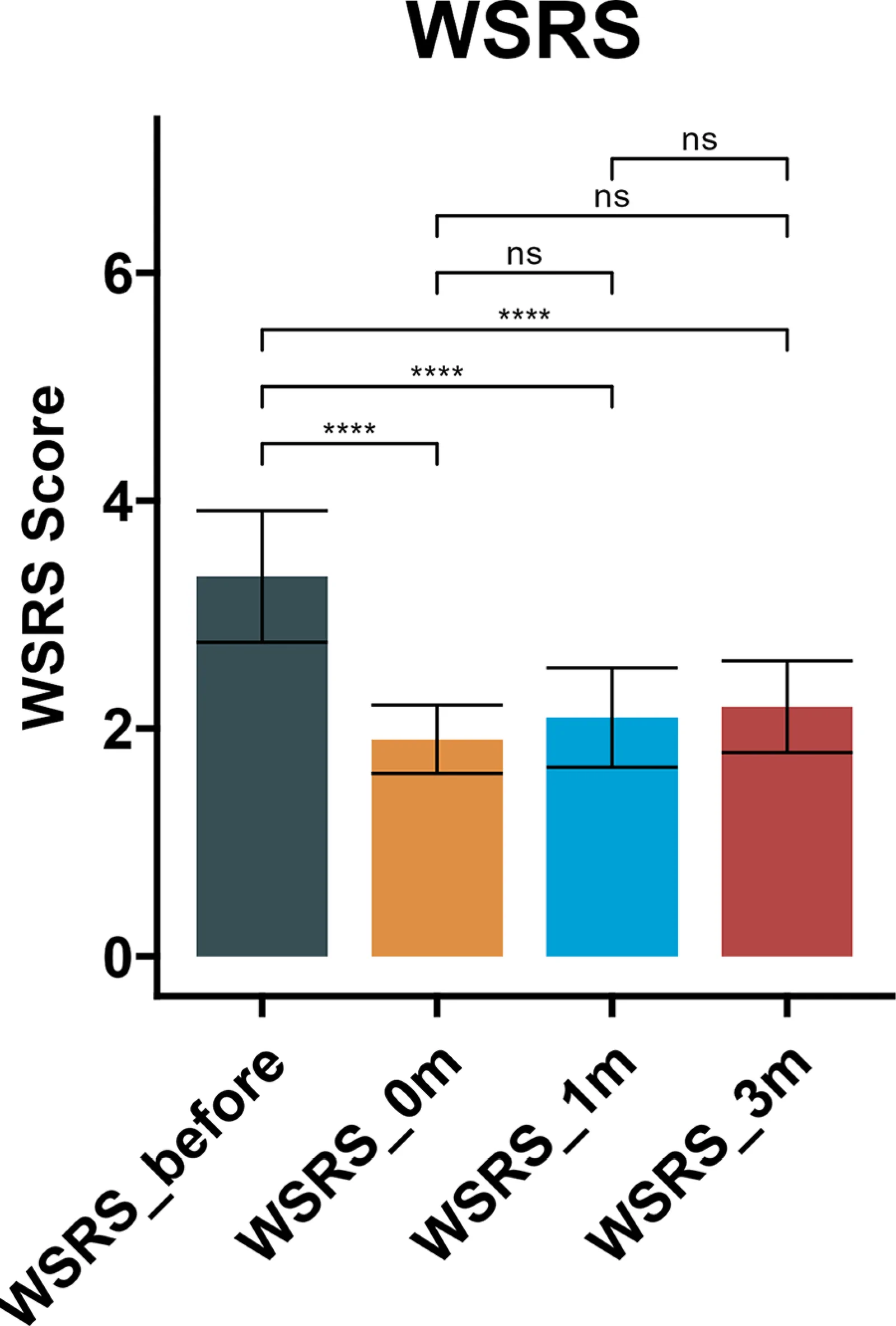
The mean baseline WSRS score was 3.33 ± 0.58, indicating moderate wrinkles. Immediately posttreatment, the score decreased significantly to 1.90 ± 0.30 ( P < .01), reflecting a 42.9% reduction (Fig. 1 ). At 1 month posttreatment, the WSRS score remained significantly lower than baseline (2.10 ± 0.44, P < .01), with a 37.0% reduction from pretreatment values. By 3 months, the score was 2.19 ± 0.40, still significantly improved compared to baseline ( P < .01), corresponding to a 34.2% reduction. Although WSRS scores showed a slight upward trend from immediate posttreatment to 3 months, no statistically significant differences were observed between these time points ( P > .05).

Figure 1. Changes in WSRS scores over time. Bar graph showing mean WSRS scores (± SD) at baseline, immediately posttreatment, 1 month, and 3 months posttreatment (n = 21). Significant reductions were observed immediately posttreatment (1.90 ± 0.30 vs baseline 3.33 ± 0.58, P < .01), with sustained improvements at 1 month (2.10 ± 0.44, P < .01) and 3 months (2.19 ± 0.40, P < .01). No significant differences were noted between posttreatment time points (ns, P > .05). Analysis: repeated-measures ANOVA with Tukey test. * P < .05, ** P < .01, *** P < .001, **** P < .0001. ANOVA = analysis of variance, ns = not significant, SD = standard deviation, WSRS = Wrinkle Severity Rating Scale.WSRS 评分随时间变化柱状图(n=21),显示治疗后即刻、1 月、3 月评分均较基线显著下降,各随访点之间无显著差异。
Immediate posttreatment, the mean GAIS score was 2.95 ± 0.74, indicating a moderate to marked improvement. At 1 month, the score was 2.43 ± 0.60, and at 3 months, it remained stable at 2.38 ± 0.50 (Fig. 2 ). No significant differences were noted between the 1 month and 3-month GAIS scores ( P > .05).
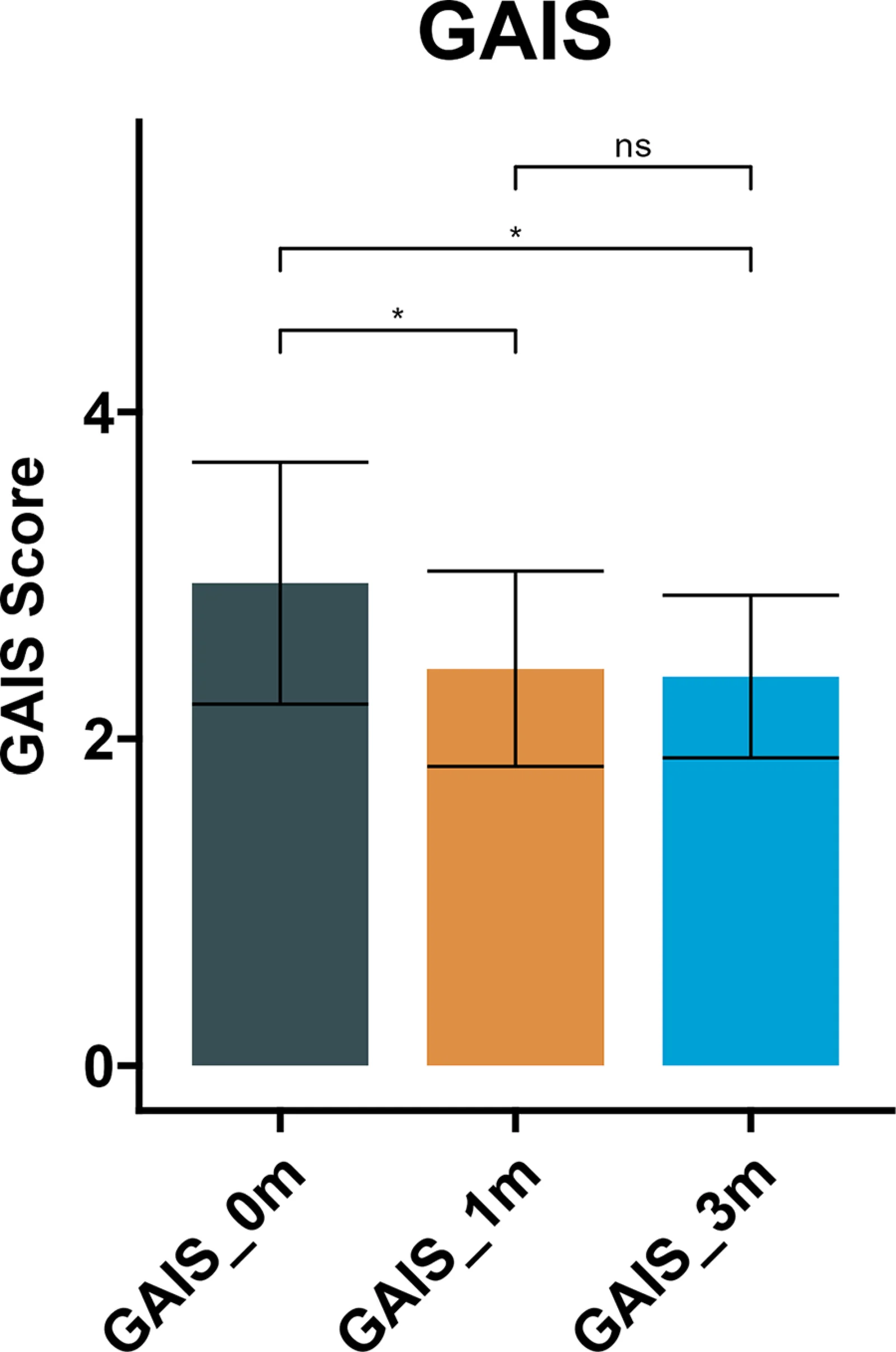
Figure 2. Changes in GAIS scores over time. Bar graph displaying mean GAIS scores (± SD) immediately posttreatment, 1 month, and 3 months posttreatment (n = 21). Immediate improvement (2.95 ± 0.74) was sustained at 1 month (2.43 ± F0.60) and 3 months (2.38 ± 0.50). No significant differences between 1 month and 3-month scores (ns, P > .05). Analysis: repeated-measures ANOVA with Tukey test. * P < .05, ** P < .01, *** P < .001, **** P < .0001. ANOVA = analysis of variance, GAIS = Global Aesthetic Improvement Scale, ns = not significant, SD = standard deviation.Inter-rater reliability for WSRS and GAIS assessments was high, with intraclass correlation coefficients of 0.82 and 0.85, respectively, confirming consistent evaluation across raters.
No severe adverse events (e.g., blisters, scarring, or nerve injury) were observed. Transient erythema was the most common reaction, with a mean duration of 1.05 ± 0.59 days. Mild edema resolved within 3.95 ± 1.28 days in all cases. One patient developed mild hyperpigmentation in the left mandibular area, which resolved completely within 1 month without intervention.
The mean pain score (VAS) during treatment was 2.86 ± 0.79, classified as mild discomfort. No correlation was found between pain scores and treatment energy levels ( P = .32).
At 3 months posttreatment, the mean patient satisfaction score was 3.67 ± 0.58 (on a 0–4 scale). Of the 21 patients, 20 (95.2%) reported high satisfaction (scores 3–4), and 1 (4.8%) reported moderate satisfaction (score 2). No patients expressed dissatisfaction.
Case 1: a 35-year-old female with baseline WSRS 3 (moderate wrinkles) and prominent nasolabial folds. Posttreatment, her WSRS score improved to 2 at 3 months, with GAIS 3 (marked improvement). Clinical photographs showed reduced nasolabial fold depth and enhanced jawline definition (Fig. 3 ).
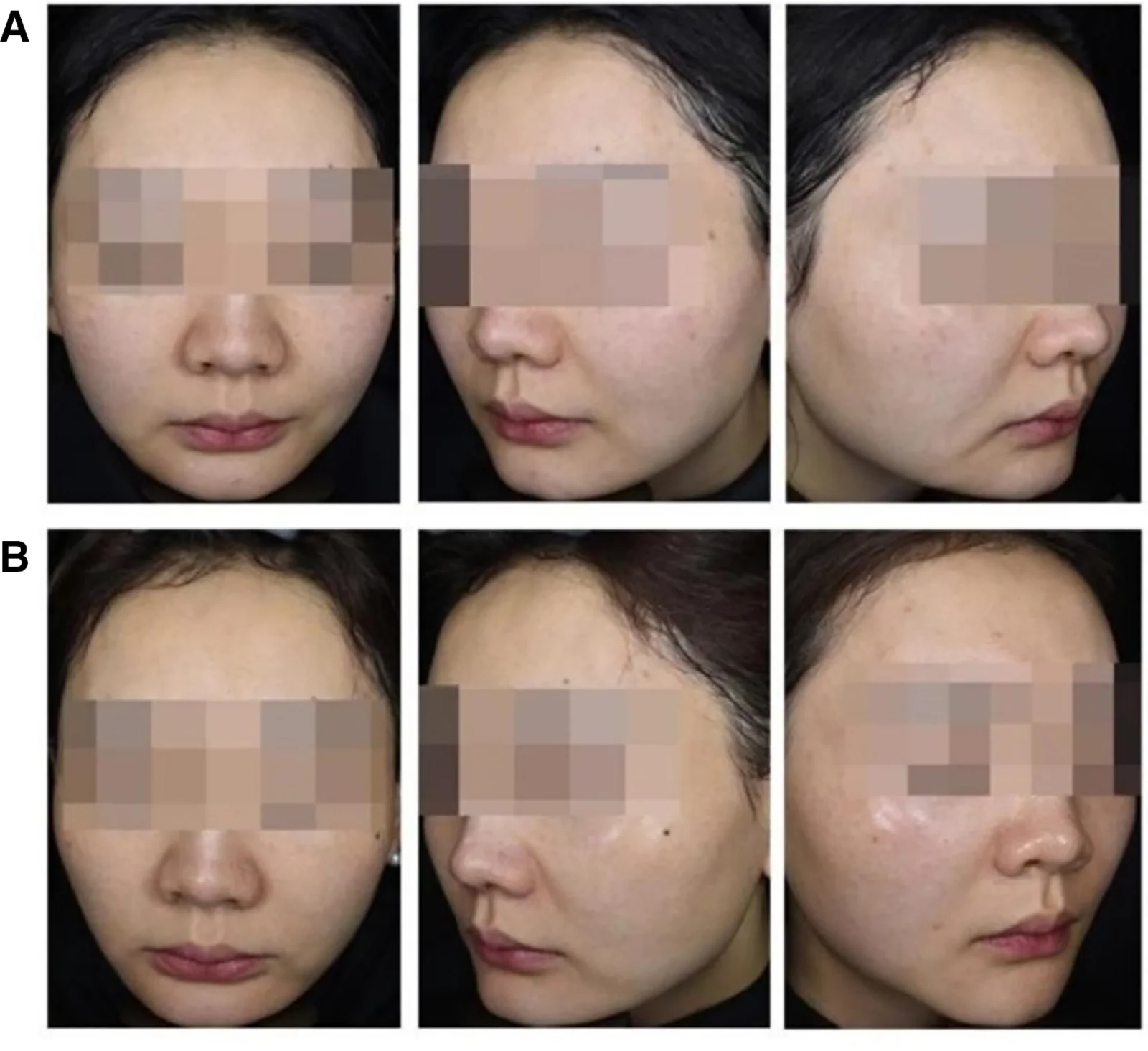
Figure 3. Clinical outcomes of a 35-year-old female patient. Standardized VISIA-CR images (frontal, left 45°, right 45° views). (A) Baseline: moderate facial laxity, prominent nasolabial folds, and perioral wrinkles (WSRS = 3); (B) 3 months posttreatment: reduced nasolabial folds, improved skin tightness, and diminished perioral wrinkles (WSRS = 2; GAIS = 3). No residual adverse events. GAIS = Global Aesthetic Improvement Scale, WSRS = Wrinkle Severity Rating Scale.35 岁女性病例的标准化 VISIA-CR 影像,基线(A)示中度松弛、明显鼻唇沟与口周皱纹(WSRS=3),3 月后(B)鼻唇沟变浅、皮肤收紧、口周皱纹减少(WSRS=2,GAIS=3)。Case 2: a 49-year-old female with baseline WSRS 4 (moderate-to-severe wrinkles). At 3 months, her WSRS score decreased to 2, with GAIS 3. Improved skin tightness in the mid-lower face and reduced perioral laxity were observed (Fig. 4 ).
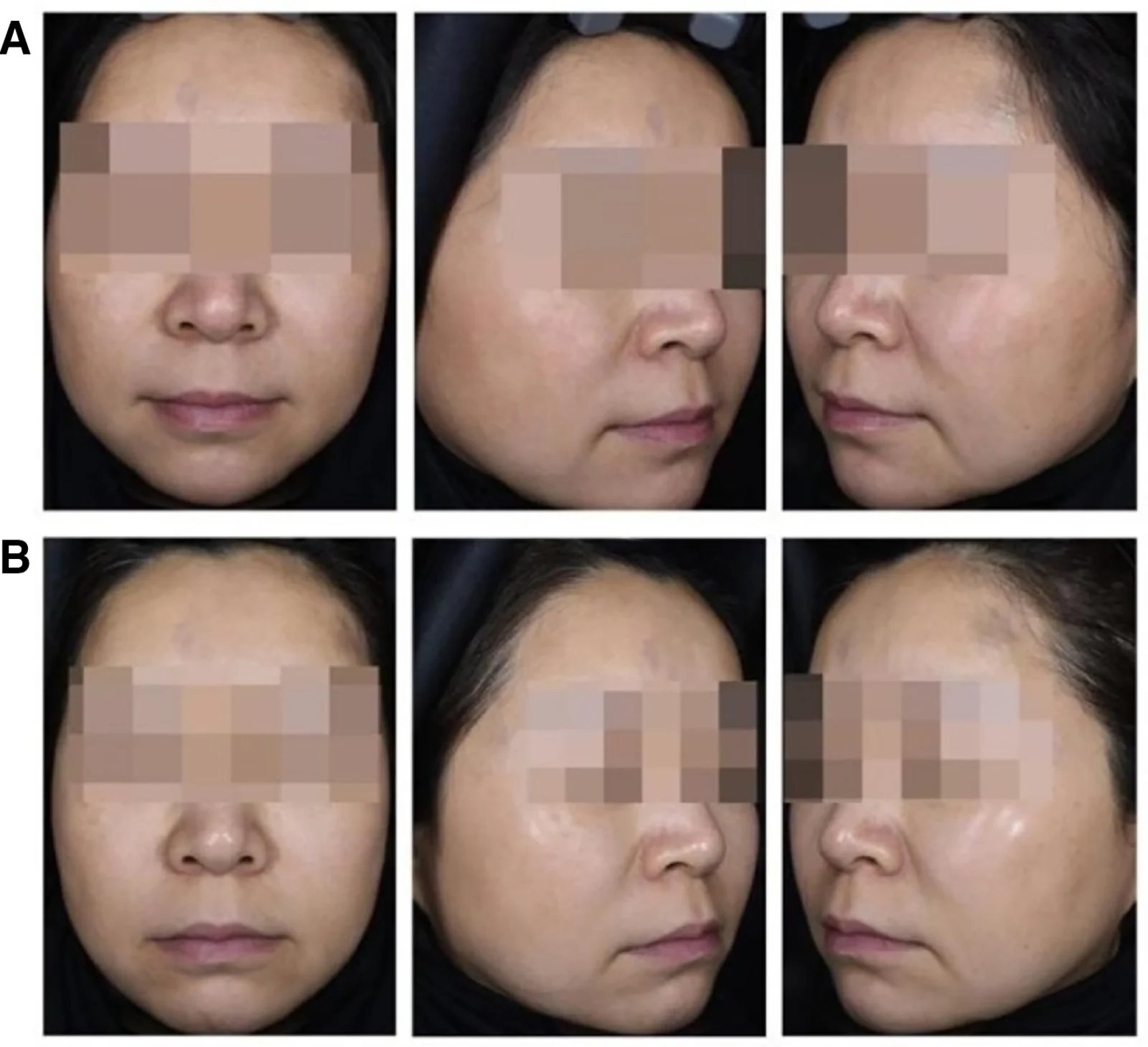
Figure 4. Clinical outcomes of a 49-year-old female patient. Standardized VISIA-CR images (frontal, left 45°, right 45° views). (A) Baseline: moderate-to-severe laxity, deep nasolabial folds, and jawline sagging (WSRS = 4); (B) 3 months posttreatment: enhanced jawline contour, reduced nasolabial folds, and improved midfacial tightness (WSRS = 2; GAIS = 3). No long-term adverse effects. GAIS = Global Aesthetic Improvement Scale, WSRS = Wrinkle Severity Rating Scale.
This pilot study systematically investigates the efficacy and safety of MFU for facial and neck rejuvenation in 21 patients, demonstrating significant improvements in skin laxity, wrinkle reduction, and patient satisfaction, with a favorable safety profile over 3 months of follow-up. The findings not only align with previous research but also offer novel insights into the temporal dynamics of MFU-induced tissue remodeling and its clinical implications.
The primary outcome, significant reductions in WSRS scores immediately posttreatment (42.9% reduction) and sustained improvements at 1 and 3 months, confirms MFU’s ability to alleviate wrinkles and enhance skin tightness. The immediate improvement likely stems from 2 concurrent processes: direct thermal-induced collagen contraction, which provides an instant tightening effect, and transient tissue edema that temporarily smooths surface irregularities. [ 13 ] This aligns with histological studies showing immediate collagen fiber shortening in response to thermal stimuli. [ 6 ]
Notably, WSRS scores exhibited a slight upward trend from the immediate posttreatment period to 3 months (1.90 ± 0.30 vs 2.19 ± 0.40), though remaining significantly lower than baseline. This pattern reflects the dynamic nature of tissue remodeling: while initial edema resolves, the gradual synthesis of new collagen and ECM remodeling sustain long-term improvements. [ 14 ] The sustained efficacy at 3 months contrasts with shorter-acting treatments like injectables, which rely on volume augmentation rather than structural remodeling, underscoring MFU’s potential for durable rejuvenation. [ 11 ]
Consistent with WSRS findings, GAIS scores demonstrated significant aesthetic improvement posttreatment, with maintenance at 3 months. This alignment between objective wrinkle assessment and global aesthetic evaluation strengthens the validity of MFU’s clinical impact, as GAIS captures holistic improvements in facial contour and skin texture. [ 2 ] The mean GAIS score of 2.38 ± 0.50 at 3 months, corresponding to moderate improvement (25–50%), is comparable to results from larger cohorts, reinforcing generalizability across diverse patient populations. [ 15 ]
Safety data from this study further support MFU as a well-tolerated modality. Adverse events were limited to transient edema (3.95 ± 1.28 days) and erythema (1.05 ± 0.59 days), consistent with previous reports. [ 8 , 15 ] The single case of mild hyperpigmentation, which resolved within 1 month, highlights the importance of posttreatment sun protection, as ultraviolet exposure can exacerbate melanin production in thermally stressed skin. [ 13 ] The absence of severe complications (e.g., blisters, scarring) underscores the safety of the employed treatment parameters (frequency: 4 Hz; energy levels: III–V) and the sequential application of M4.5, M3.0, D4.5, and D3.0 probes, which ensures uniform energy distribution and minimizes overheating risks. [ 7 ]
Patient-reported pain (VAS: 2.86 ± 0.79) was classified as mild, contributing to high satisfaction (3.67 ± 0.58). This low pain profile likely reflects the device’s precise energy delivery and real-time parameter adjustments based on patient tolerance, addressing a common concern with energy-based treatments. [ 16 ] The high satisfaction rate (95.2% reporting high satisfaction) correlates with both objective improvements and minimal downtime, aligning with patient priorities for effective yet convenient rejuvenation modalities. [ 3 ]
Our results align with broader trends in MFU research. A systematic review by Modena et al reported mean WSRS reductions of 30 to 50% and sustained GAIS improvements at 3 months, [ 9 ] consistent with our 42.9% immediate WSRS reduction and maintained efficacy at 3 months. Similarly, Chen et al observed significant wrinkle improvement in upper facial skin post-MFU, [ 13 ] with high patient acceptability, mirroring our findings across facial and neck regions.
Notably, our study extends existing knowledge by focusing on a relatively young cohort (mean age: 39.62 ± 7.24 years), demonstrating that MFU is effective even in patients with early-stage laxity. Previous studies have predominantly included older populations with more severe aging, [ 8 ] leaving a gap in data for younger adults. Our findings suggest that early intervention with MFU may delay the need for more invasive procedures by preserving collagen architecture and preventing further laxity. [ 6 ]
A key distinction from prior work is our standardized treatment protocol, including posttreatment light-emitting diode yellow light therapy and cold compresses. This adjunctive care may have accelerated resolution of erythema and edema by reducing inflammation and promoting tissue repair, [ 13 ] contributing to the favorable safety profile observed. Such protocol standardization addresses a critical limitation in existing literature (variability in posttreatment care) which can confound adverse event reporting. [ 7 ]
The observed outcomes are underpinned by MFU’s dual action on collagen: immediate thermal contraction and delayed regeneration. The immediate WSRS and GAIS improvements reflect rapid collagen fiber shortening in response to temperatures of 55–70°C within the thermal coagulation zones. [ 5 ] Over subsequent months, sustained efficacy arises from fibroblast activation, which upregulates collagen type I and III synthesis and ECM remodeling. [ 6 ] The slight score increases at 1 and 3 months likely represent a balance between resolving edema (which initially masks subtle laxity) and ongoing collagen deposition, with net improvement persisting due to cumulative ECM restructuring. [ 14 ]
MFU’s ability to target the SMAS distinguishes it from modalities limited to the dermis. SMAS tightening addresses a primary driver of facial sagging, explaining the comprehensive improvements in jawline contour and nasolabial folds observed in our typical cases. This deep-tissue targeting also explains why MFU’s effects outlast those of surface treatments, which lack access to the structural layers responsible for long-term skin integrity. [ 2 ]
This study has several limitations. First, the small sample size (n = 21) and short follow-up (3 months) restrict conclusions about long-term efficacy and generalizability across diverse ethnicities or age groups. Larger, multicenter studies with 6 to 12 month follow-ups are needed to validate durability and explore potential dose-response relationships (e.g., optimal energy levels for different skin types). [ 9 ] Second, the single-arm observational design without a control or sham-treatment group limits causal inference and prevents placebo effects, regression to the mean, and residual observer bias from being fully excluded. [ 13 ] Third, while WSRS and GAIS are validated, they remain semiquantitative subjective endpoints and therefore may still be influenced by residual evaluator subjectivity. Integrating objective measurements, such as ultrasound elastography for skin elasticity or optical coherence tomography for dermal thickness, would enhance precision. [ 6 ] Fourth, the absence of histological data limits mechanistic insights. Future studies incorporating biopsy samples could quantify changes in collagen density, fibroblast activity, and ECM components (e.g., hyaluronic acid, elastin), linking clinical outcomes to molecular processes. [ 6 ]
Additionally, exploring subgroup analyses, such as by age, skin type, or baseline laxity severity, could identify optimal candidates for MFU. For instance, younger patients with mild laxity may require lower energy levels, while older individuals with advanced sagging might benefit from repeat treatments. [ 8 ] Finally, comparing MFU with other modalities (e.g., radiofrequency, laser resurfacing) in head-to-head trials would clarify its relative efficacy and safety in specific clinical scenarios. [ 1 ]
This pilot prospective observational study suggests that MFU is a promising noninvasive option for facial and neck rejuvenation in young to middle-aged adults, with significant and sustained improvements in wrinkles, skin tightness, and patient satisfaction. Its capacity to induce both immediate and long-term effects through collagen contraction and regeneration, coupled with minimal adverse events and low pain, supports its potential as a promising short-term noninvasive option for early to moderate skin laxity. Standardized protocols, including adjunctive posttreatment care, enhance outcomes and safety. While larger, longer-term studies are required, these findings bolster the evidence base for MFU, positioning it as a valuable tool in the aesthetic physician’s arsenal for personalized facial rejuvenation.
We would like to extend our appreciation to DeepSeek for its assistance with language polishing and refinement only.
Conceptualization: Zhonglan Pan, Bingrong Zhou.
Data curation: Zhonglan Pan, Sihui Wang.
Formal analysis: Zhonglan Pan, Yanqiu Tang.
Funding acquisition: Bingrong Zhou.
Methodology: Zhonglan Pan, Yanqiu Tang, Sihui Wang.
Project administration: Bingrong Zhou.
Resources: Zuoqiong Hou.
Supervision: Zuoqiong Hou, Bingrong Zhou.
Validation: Zhonglan Pan, Bingrong Zhou.
Writing – original draft: Zhonglan Pan.
Writing – review & editing: Yanqiu Tang, Sihui Wang, Zuoqiong Hou, Bingrong Zhou.
声明:中文精读 · 仅供学术参考。内容来自公开文献检索,不代表本人观点,不构成诊疗建议。 医疗美容需在正规医疗机构由执业医师实施。
基于相同主题推荐 · 继续深挖
单中心、非对照 pilot 研究,共 21 例(女 20 例、男 1 例,平均年龄 39.62±7.24 岁),接受单次 MFUS One 微聚焦超声治疗。
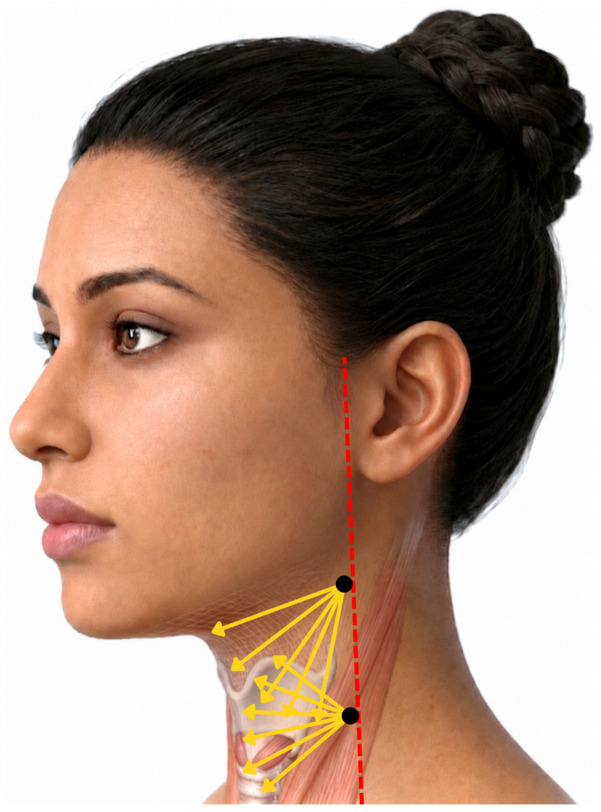
一项前瞻性、开放标签探索性临床研究纳入13名颈部皮肤松弛女性(平均48.5岁),单次采用STIIM UP方案(CaHA+HA+BoNT-A经22G钝针扇形注射至颈前皮下)。
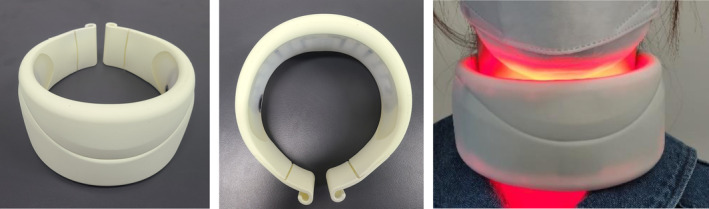
多中心、随机、双盲、假手术对照优效性试验:70 例亚洲受试者(30–65 岁,Fitzpatrick II–V,基线 LWS 2–4)完成方案;设备为 630nm LED/850n